


Curtain guide
Find your curtain header style
The header determines how a curtain connects to the rod or track and strongly influences the finished shape. Choose the hardware first, then compare the look, movement, and product options for each style.
Step 1
Start with your rod or track
Identify the hardware already installed—or the system you plan to install—before selecting a header. Some styles hang directly on a rod, while others use hooks, rings, carriers, or a compatible track.

Use the diagram as a visual guide, then confirm compatibility on the selected product page.
Check these details
- Hardware type: decorative rod, traverse rod, ceiling track, wall track, or another system
- Connection: direct rod pocket, grommet, tab, ring, hook, or track carrier
- Clearance: available rod diameter, ring opening, and space between the hardware and wall
- Movement: whether the curtains will open frequently or remain mostly decorative

The required finished width depends on the selected header and how the product is configured.
Step 2
Understand finished width and fullness
Fullness describes the extra fabric used to create folds. Pleated and ripple-style headers may already account for fullness in their construction, while other headers may require a wider finished panel for a gathered look.
Enter the finished dimensions requested on the product page. Do not automatically add fullness unless the ordering instructions tell you to do so.
Style library
Compare the finished look
Use the images to compare shape and visual character. Exact construction, dimensions, and compatibility can vary, so check the options offered on the curtain you intend to order.

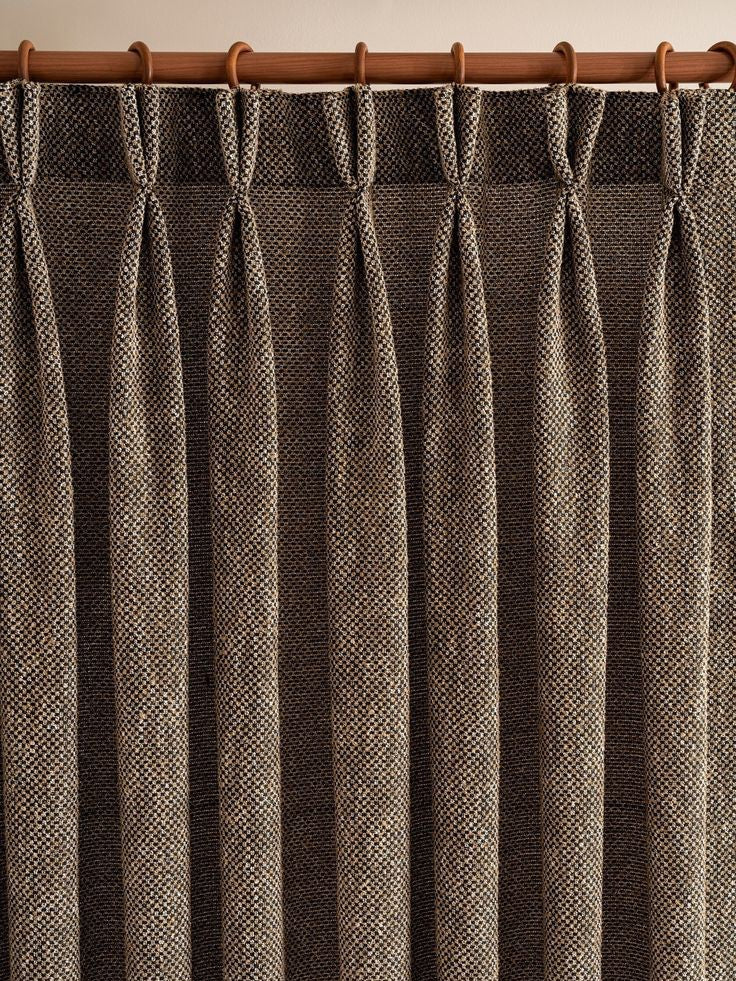
Pinch pleat
Sewn pleats create a tailored, consistent shape. Depending on the product, it may hang from a track or from a pole fitted with rings.

Triple pleat
A more pronounced pleated header that creates a formal rhythm across the top of the curtain.

Tailored / French pleat
A refined pleated option with a softer tailored profile. Confirm the hook and hardware requirements shown for the product.

Grommet top
Metal-look openings slide directly onto a curtain rod and form broad, relaxed folds. Check the rod diameter against the product specification.

Rod pocket
A sewn channel slips over the rod for a simple gathered top. It is often most convenient where curtains move less frequently.

Tab top
Visible fabric loops wrap over the rod and make the hardware part of the design.

Back tab
Hidden loops on the reverse create a clean face and soft folds without showing the connection points.

Flat panel
A simple header that keeps the top line understated. Hanging method and hook placement depend on the selected construction.

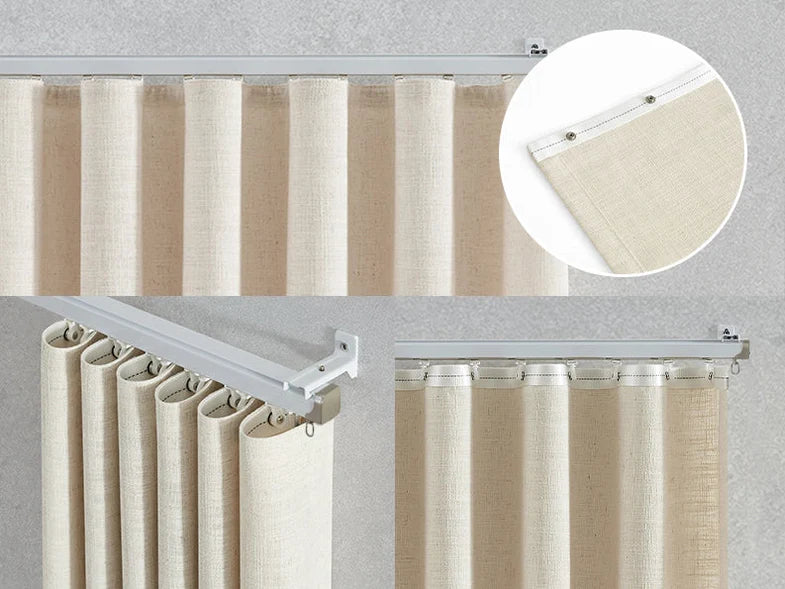
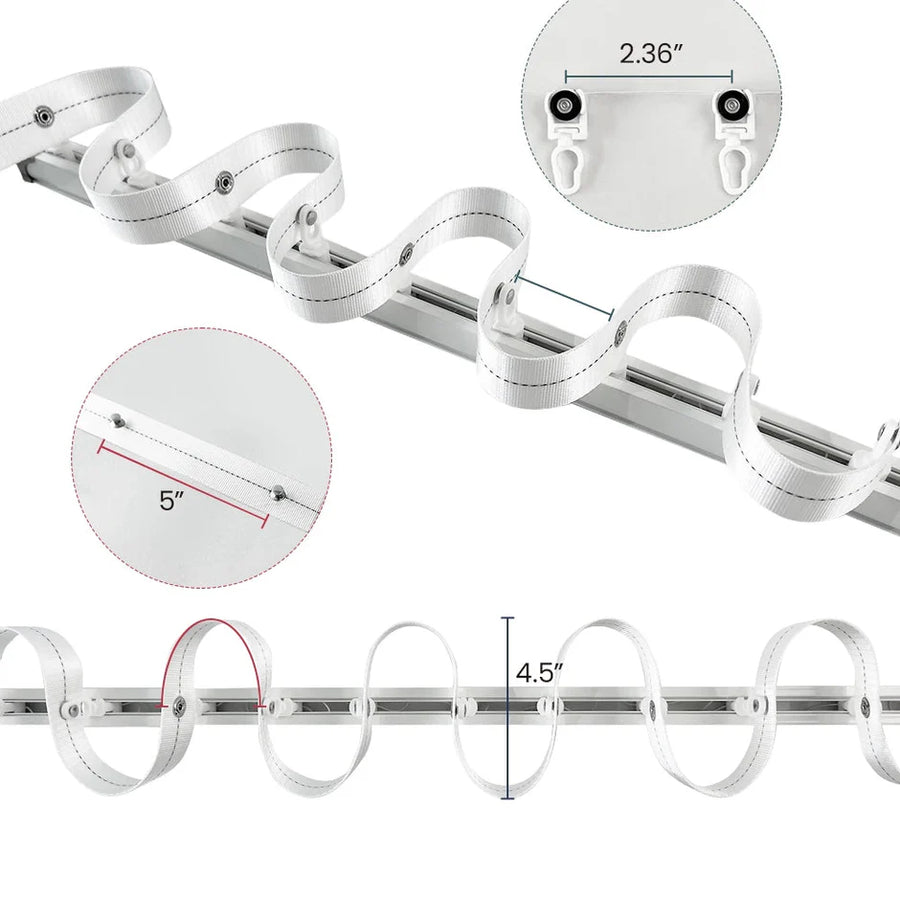
Ripple fold
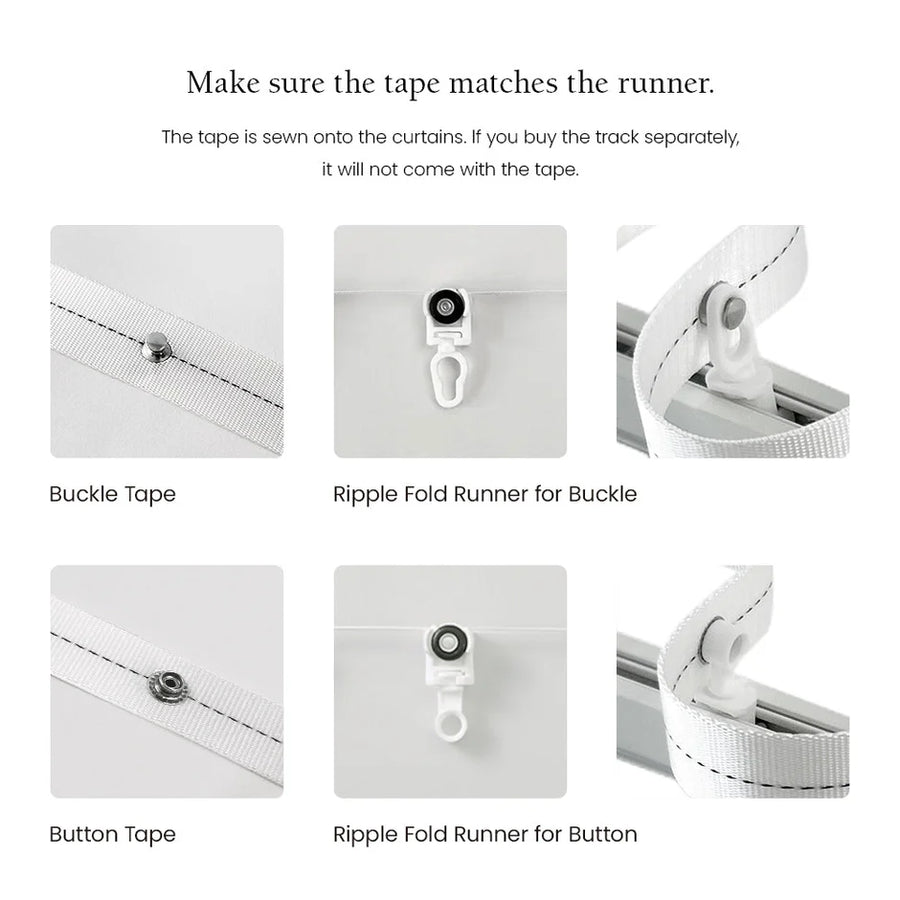
Creates even wave-like folds along a compatible track. The track, carriers, and curtain tape must work together as a system.

4-in-1
A flexible construction designed to support more than one hanging method. Review the product details to see which configurations are available.
Detail views
Look closely at the hardware connection
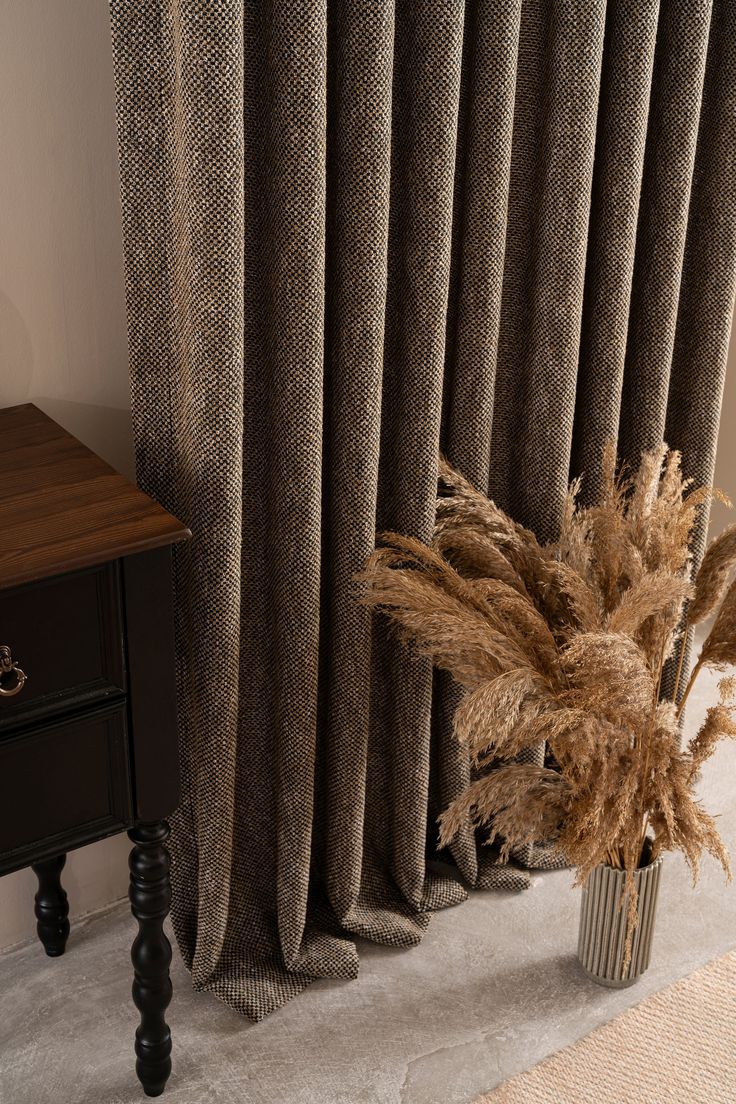
These existing detail images show how pleated and ripple-style headers meet their hooks, rings, or track components.

Next step
Measure for the selected header
Where you start and end the length measurement can change with the hanging method. Use the measurement guide after choosing your rod or track and preferred header.